
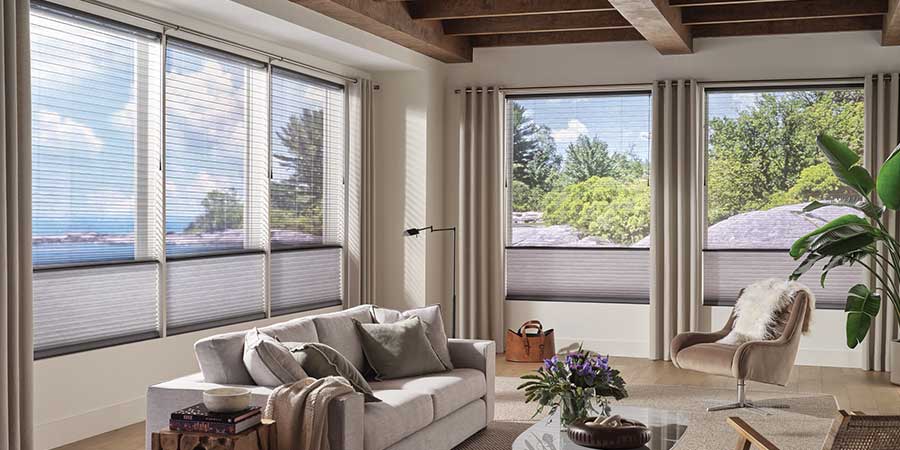
When it comes to window coverings that truly do it all, cellular shades are hard to beat. They offer style, energy efficiency and light control, all in one sleek design. Whether you’re looking to improve comfort, add a polished look to your space or simply get relief from harsh sunlight, cellular shades offer solutions for a wide range of windows and doors.
But what exactly makes a shade “cellular?” From the signature honeycomb construction to horizontal, vertical and roller-style designs, let’s take a closer look at how cellular shades work and where they can make a difference in your home.
What Is a Cellular Shade?
The name comes down to the shade’s unique cellular structure. Built-in air pockets create a natural barrier between your indoor air and the weather outside. This helps reduce heat transfer at the window, making it easier to keep your home comfortable without putting as much demand on your heating and cooling system.

Cellular Shades vs. Honeycomb Shades: Is There a Difference?
You’ll often hear the terms cellular shades and honeycomb shades used to describe the same type of window covering. Both refer to shades constructed with cells that trap air at the window. The shape of those cells resembles a honeycomb when viewed from the side, which is where the familiar name comes from.
One of the best-known examples is Duette® Honeycomb Shades from Hunter Douglas. The collection pairs cellular construction with a wide range of fabrics, light control options and specialty solutions for different windows throughout the home.

How Do Cellular Shades Insulate Windows?
Windows can be a significant source of heat gain and heat loss in the home. The pockets within a cellular shade hold air between the room and the glass, creating an additional insulating layer at the window. This can help protect your home from outdoor temperature changes, whether you’re trying to keep summer heat outside or maintain a warm, comfortable interior during a Northeast Ohio winter.
Cellular construction is just one way to improve comfort at the window. If insulation is one of your priorities, explore our energy-efficient window treatment solutions to compare your options.
What Types of Cellular Shades Are Available?
Cellular construction isn’t limited to one type of shade. Different collections use the insulating structure in different ways, giving you options for standard windows, expansive glass and even roller-style operation.
Duette® Honeycomb Shades
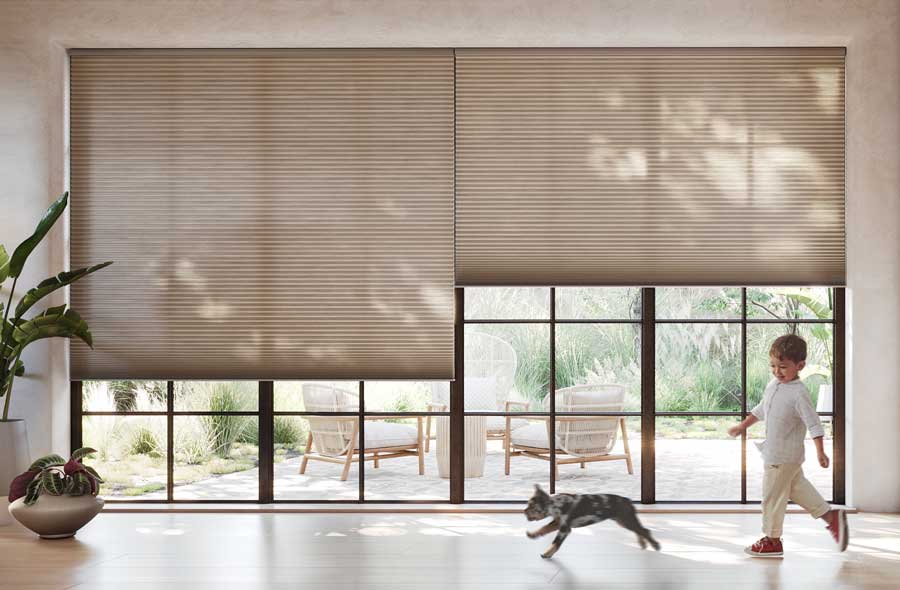
Duette® Honeycomb Shades are most commonly known by homeowners. Their signature pleats combine energy-efficient cellular construction with a clean, tailored look at the window. A broad selection of fabrics and operating options makes it possible to customize the shades around the light control, privacy and function you need.
Vertical Cellular Shades
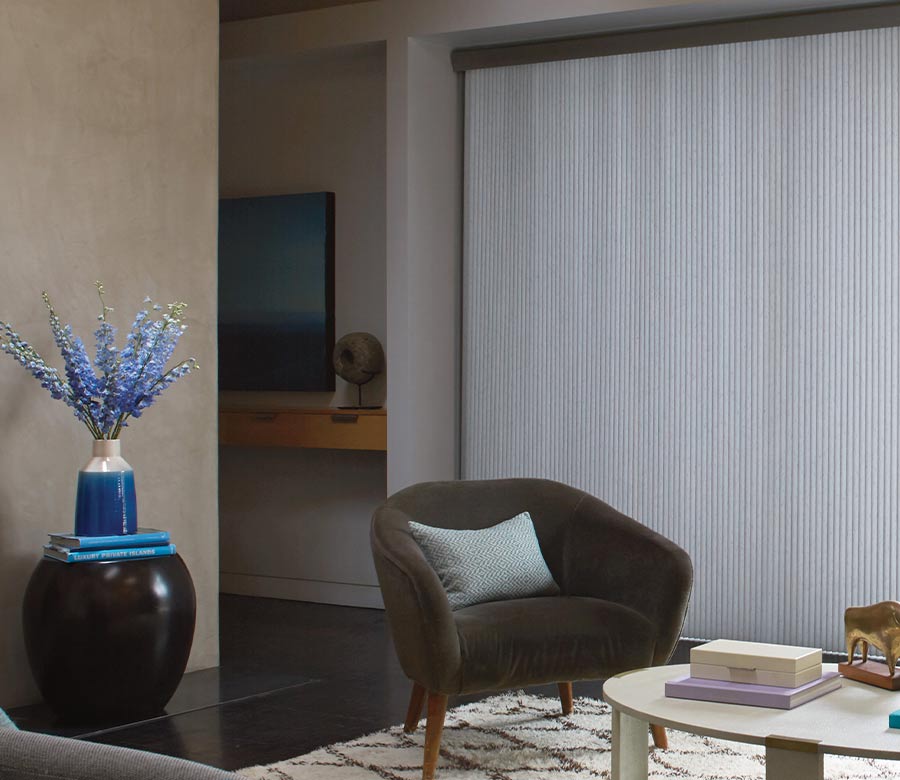
The same cellular concept can work on your largest windows and doors. Duette® Vertiglide™ is a vertical cellular shade that slides from side to side while providing the insulating benefits of honeycomb construction. This makes it especially useful for sliding glass doors and wide expanses of glass where easy access is important.
Cellular Roller Shades
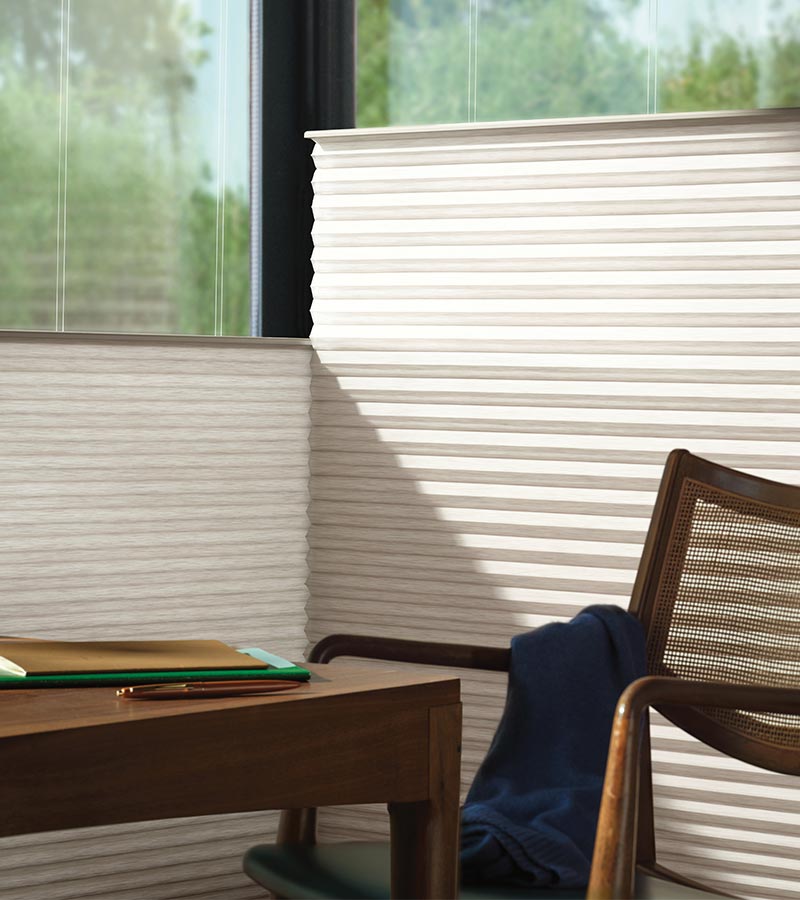
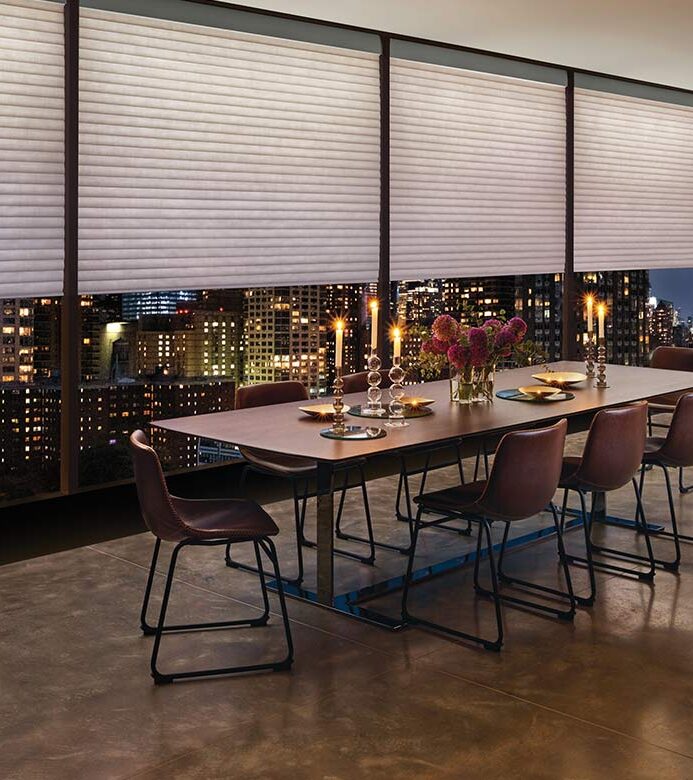
Take a look at another type of cellular shade that combines roller shade operation with honeycomb structure: the Sonnette® Cellular Roller Shade. The cellular fabric offers added insulation, while the roller-style design creates a streamlined appearance and rolls neatly into the headrail when raised.

Where Do Cellular Shades Work Best?
One of the reasons cellular shades are so versatile is that their benefits aren’t limited to one room or window type. The right design can help solve very different challenges throughout your home.
Bedrooms & Rooms That Need Light Control
Cellular shades can soften incoming sunlight or provide stronger room darkening depending on the fabric and design you choose. That flexibility makes them a natural fit for bedrooms, nurseries, media spaces and other rooms where controlling exterior light matters. For spaces where blocking incoming light is the priority, compare our room darkening and blackout solutions.

Large Windows & Sliding Glass Doors
Large expanses of glass bring beautiful natural light into the home, but they can also expose the interior to heat, cold and harsh sunlight. Cellular shades help add insulation across the glass, while vertical cellular designs make it easy to move the treatment out of the way when you need access to a door.
If expansive glass is one of your challenges, explore our large window treatment solutions to see additional ways to balance light, privacy, views and everyday operation.
Windows Where You Want Light & Privacy
Sometimes you don’t want to choose between natural light and privacy. Top down bottom up operation lets you lower the shade from the top, allowing daylight and an outside view above while keeping the lower portion of the window covered. It’s especially useful for bedrooms, bathrooms and street-facing windows. Explore our Top Down Bottom Up shades to learn more about this type of light control.
Hard-to-Reach Windows
Cellular shades can also make sense for tall and hard-to-reach windows, especially when paired with automation. With PowerView® Automation, you can adjust compatible shades with a remote, smart device or voice command, create schedules and save favorite settings for different times of day.
Cellular Shades Can Do More Than Insulate
Energy efficiency might be one of their best-known benefits, but cellular shades can also help with privacy, glare, light control and even sound absorption. Depending on the collection, specialized options can address specialty-shaped windows, skylights, doors and other spaces that can be difficult to cover.

There are even new ways to use cellular construction beyond traditional window shades. Aura® Illuminated Shades, available with Sonnette®, pair cellular roller shades with customizable LED illumination. Even when your shades are closed, the window can glow with cool, bright light during the day or warmer, cozier light at night.
Are Cellular Shades Worth It?
If energy efficiency, comfortable temperatures, privacy and flexible light control are priorities in your home, cellular shades are certainly worth considering. Their unique construction can be adapted to everything from standard windows to large expanses of glass and sliding doors, with different collections offering different levels of performance and design.
The key is finding the cellular shade that fits the window and the way you live. Duette® Honeycomb Shades offer an extensive range of fabrics and specialty options, Vertiglide™ brings cellular performance to large windows and doors, and Sonnette® combines the benefits of cellular construction with the streamlined appearance of a roller shade.
Find the Right Cellular Shades for Your Home
With our variety of cellular shade collections, it won’t be hard to find your favorite. Our expert designers are here to help you compare fabrics, operating styles and features based on the windows in your home. Contact our team at Timan & Co. to set up your free in-home design consultation.
